
Have an old building you are trying to understand?
Start with the building itself.
Old buildings are historical records. A blocked doorway, changing brickwork, abandoned stair, faded sign, or unusual patch in the wall can all reveal clues about how a place has changed over time. Pair those physical clues with historic photographs, maps, newspapers, directories, and local archives, and a much fuller story begins to emerge.
That is the idea behind our newest free resource: Researching a Historic Building: A Practical Guide for Ohio Small Towns.
What You Will Learn
The guide walks through a practical six-step research process:
LOOK → RECORD → RESEARCH → COMPARE → INTERPRET → ACT
Along the way, it covers questions like:
- What should you look for when walking through an old building?
- Where can you find historic photographs, maps, newspapers, and property records?
- What happens when two historical sources disagree?
- How do you separate evidence from interpretation?
- How can research eventually inform preservation and redevelopment decisions?
From Research to Redevelopment
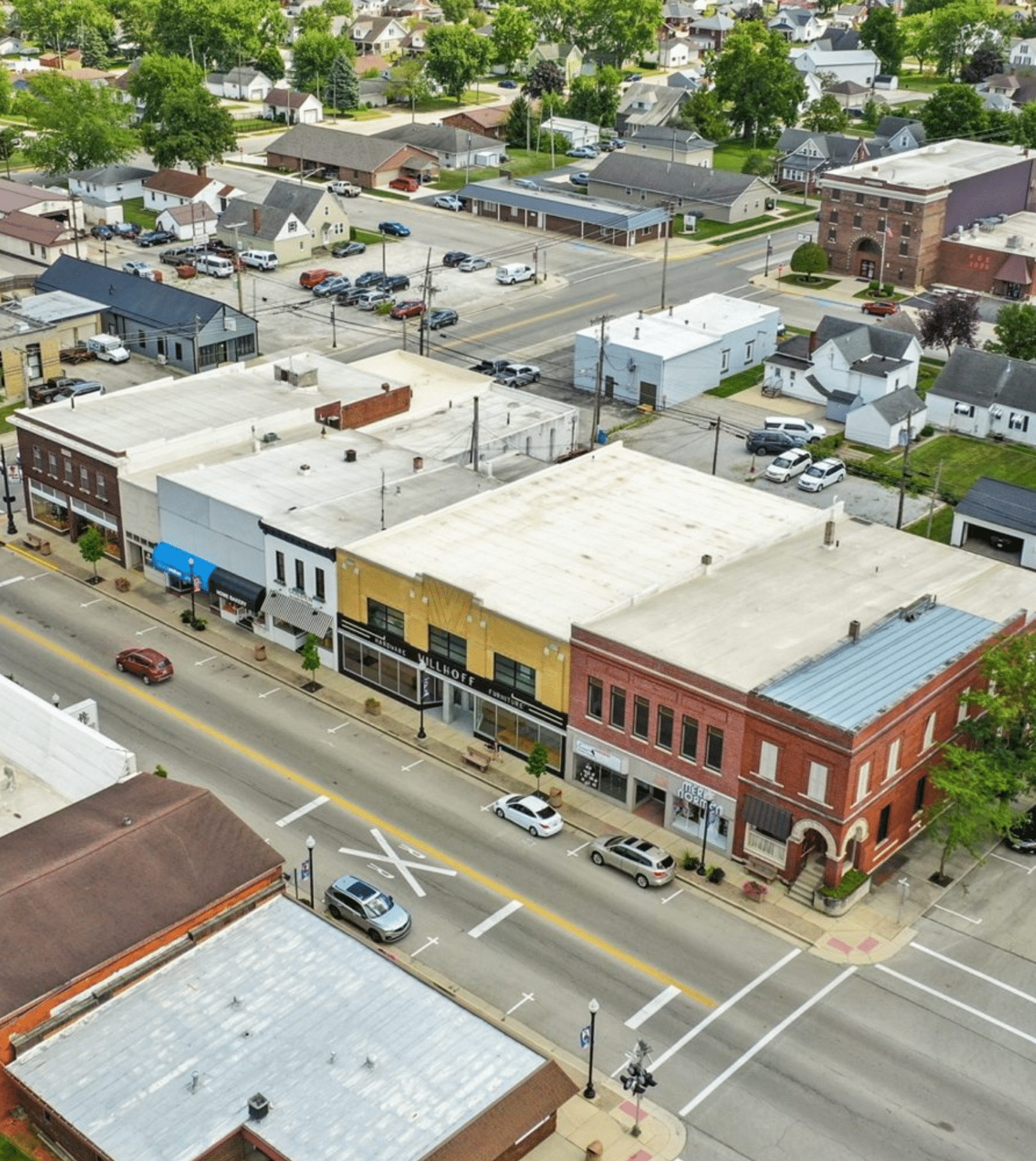
The guide also includes a real-world example from The Willhoff in Coldwater, Ohio, where later metal siding concealed much of the building’s historic façade.
Historic photographs, written records, and physical investigation were brought together to understand what had survived, what had changed, and how that evidence could guide the building’s rehabilitation.
No single source told the whole story. That is often how historic building research works.
This field guide is for building owners, developers, Main Street organizations, planners, preservationists, history lovers, and anyone else trying to better understand an older building.
No email gate. No form. Just a free tool to help more people understand the buildings that make their communities special.
And if your research eventually leads to questions about adaptive reuse, historic tax credits, feasibility, or major rehabilitation, that is where Revival can help turn what you learn about the past into a plan for what comes next.