

Congress has already proven that historic tax credits drive economic growth and housing production.
In 2023 alone, the federal Historic Tax Credit catalyzed nearly $10 billion in rehabilitation investment nationwide. In 2022, projects using the credit generated roughly $7 billion in GDP and supported more than 120,000 jobs, according to the National Park Service. Since 1976, the program has leveraged more than $130 billion in private investment.
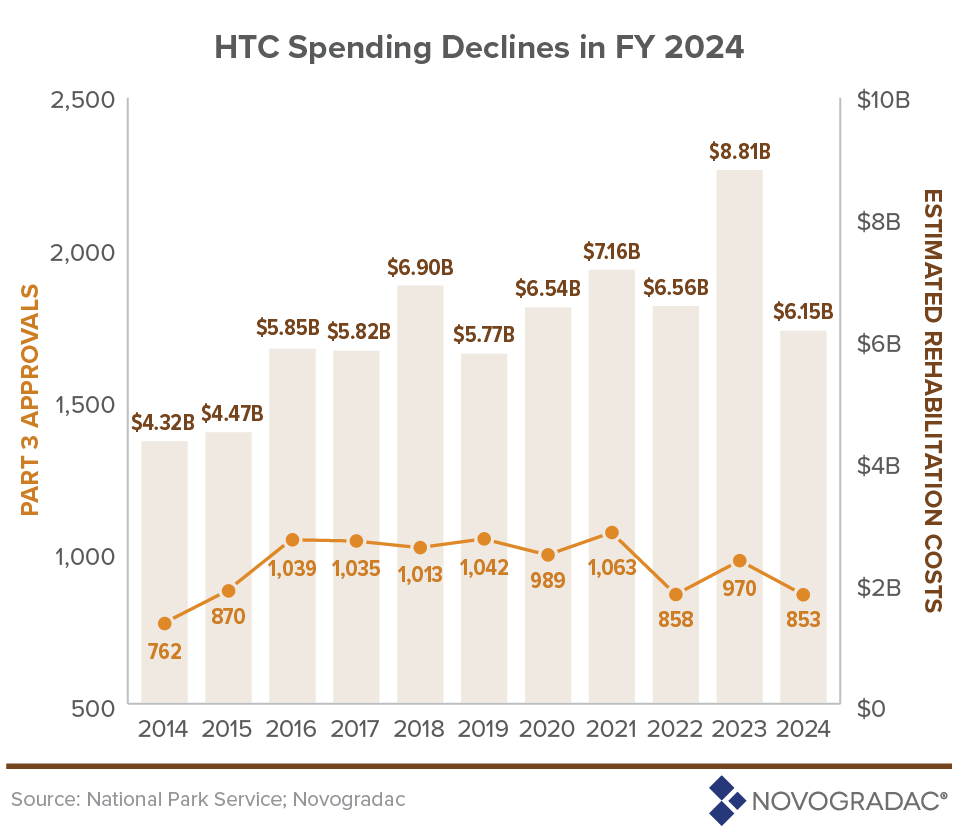
The federal model is simple: qualification-based and uncapped. If a project meets the criteria, it moves forward. That predictability is the point.
So why are so many states rationing the very tool that makes these projects viable?
Across the country, state historic tax credit programs are capped and competitive. Developers wait through allocation cycles. Projects compete for limited awards. Many viable projects receive nothing.
The result is delay. And in rural America, delay kills deals.
Housing Is Already Built
Governors in both parties say they need more housing, focusing on zoning reform, infrastructure, and workforce development. But a housing strategy is already standing in thousands of communities: legacy buildings.
Upper floors of historic downtown buildings sit vacant. Former schools and warehouses remain structurally sound but underused. These buildings are located near infrastructure and job centers, making them ideal for housing. Unlike greenfield development, adaptive reuse strengthens existing downtowns, increasing density where streets and utilities already exist.
But rehabilitation is expensive. Older buildings require environmental remediation, code upgrades, and structural improvements that can be costlier than new construction on vacant land.
The federal Historic Tax Credit helps close that gap. State credits often complete the capital stack. When states cap those credits, they create artificial scarcity in projects that already operate on thin margins.
Predictability Is Infrastructure
Investors price risk. When capital sources are predictable, underwriting is straightforward. When funding hinges on competitive allocation rounds, risk premiums rise. Large urban projects can sometimes absorb that uncertainty. Small-town projects cannot.
As a practitioner working in rural markets, I have watched viable housing developments—some with waiting lists of future tenants—stall because capital was rationed through competitive state rounds. Carrying a building for months while waiting on a tax credit decision is often financially impossible.
When states cap their programs, they distort rural capital markets and bottleneck federal leverage that would otherwise flow into their communities.
The Counterargument—and Why It Fails
State lawmakers defend caps as fiscally responsible. They argue that limiting credits protects state budgets and prevents overexposure. Budget discipline matters, but capped allocation systems do not eliminate risk. They shift it onto rural markets, small developers, and housing supply.
Historic tax credits are not open-ended cash grants. They are performance-based incentives tied to private investment. Projects must spend money, create jobs, and generate tax revenue to realize the credit.
If the federal government can operate a qualification-based model that has leveraged more than $130 billion in private investment, states can structure their companion programs to scale responsibly. Rationing capital is not the same as managing it.
Rural America Cannot Compete on Uncertainty
Lawmakers often ask why private capital bypasses small-town America. One reason is simple: unpredictability.
Rural communities rarely have deep capital stacks or national development firms waiting in the wings. For many projects, the state historic tax credit is not a bonus—it is the keystone. When awards are rationed, larger urban projects tend to dominate competitive rounds. Smaller projects that could transform rural communities are left waiting long enough to die on the vine.
Housing shortages are solved by scaling tools that work, not by limiting them.
Stop Capping What Works
States do not ration water infrastructure by lottery. They do not cap highway funding through competitive application cycles when demand increases. When infrastructure proves effective, it scales.
Infill housing in existing communities is infrastructure.
Historic tax credits are one of the few tools that simultaneously produce housing, expand tax base, leverage private capital, and reduce sprawl. States that cap these programs mistake limiting production for fiscal restraint.
If governors and legislatures want more housing, especially in rural America, they should align with the federal model: qualification-based, predictable, and scalable. Stop rationing capital. Stop distorting rural markets. And stop capping what already works.
Cally Lange is an architect, rural development strategist, and researcher working at the intersection of adaptive reuse, capital access, and regulatory design in small-town America.