Revival founder Cally Lange, AIA, NCARB was invited to present at the Appalachian Regional Commission’s 2026 Conference, Appalachia Builds: Breaking New Ground for Economic Growth. Her presentation explored one question she believes deserves far more attention: What happens between a great idea and a completed project? Below are Cally’s reflections from the conference.
Every small town has a project everyone agrees should happen.
The developer has a vision. The city supports it. The community is excited. The economics make sense. And then…nothing.
The project stalls somewhere between the ribbon-cutting ceremony everyone imagines and the paperwork nobody talks about. That space is what I have started calling the messy middle.
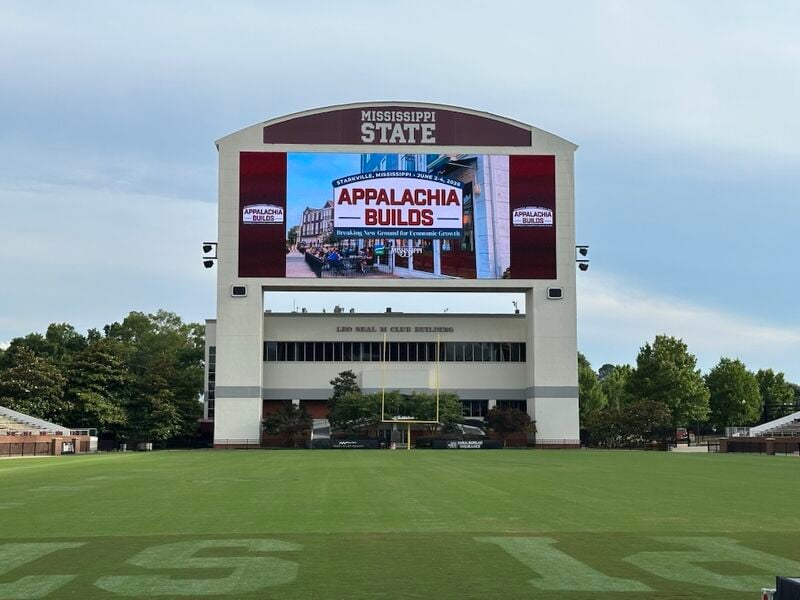
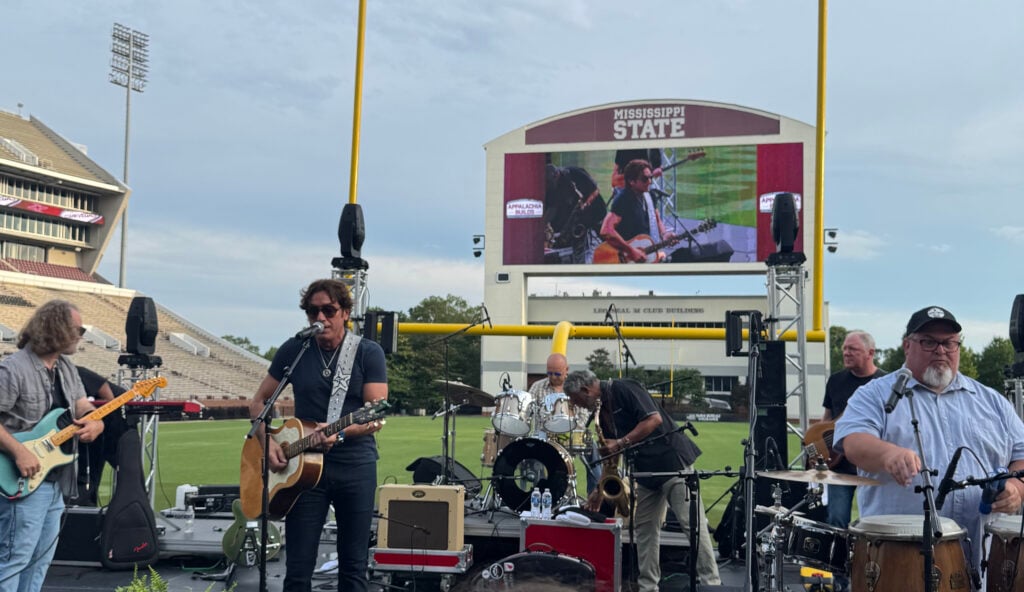
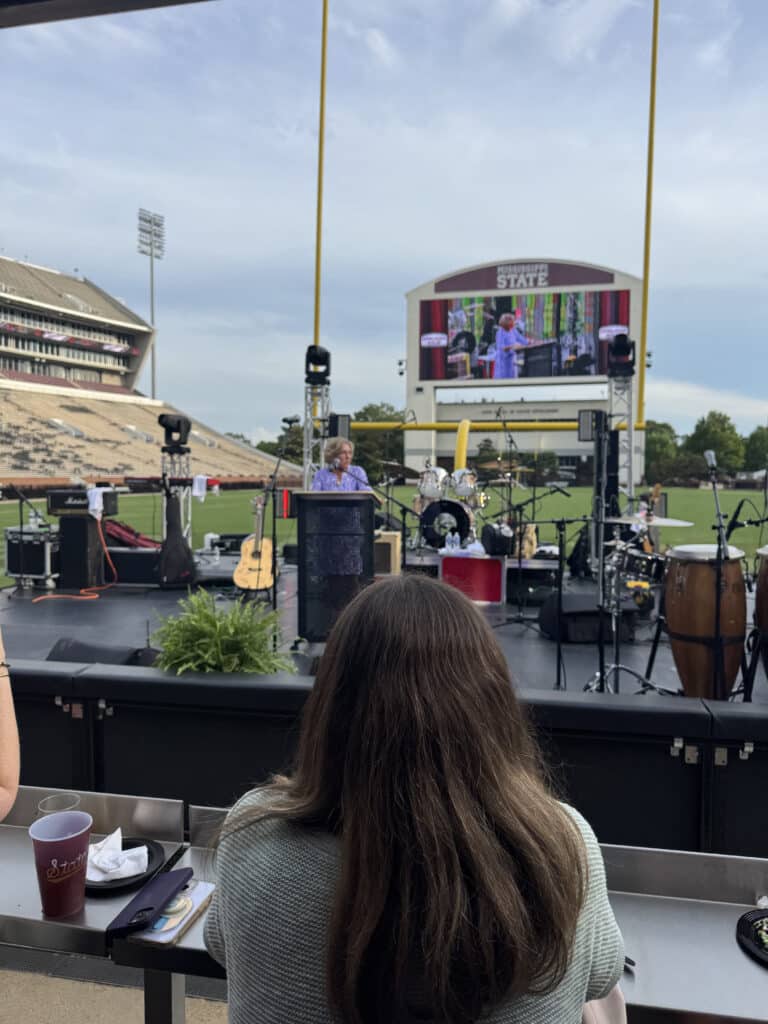
Recently, I had the opportunity to present this idea at the Appalachian Regional Commission’s 2026 conference, Appalachia Builds: Breaking New Ground for Economic Growth, held at Mississippi State University in Starkville, Mississippi. The conference brought together community leaders, educators, economic development professionals, and practitioners from across Appalachia to discuss workforce development, entrepreneurship, infrastructure, housing, and revitalization. It was an honor to learn alongside leaders including Governor Tate Reeves, ARC Federal Co-Chair Gayle Manchin, and Mississippi State University President Mark Keenum.
But my biggest takeaway did not come from the stage. It came from the conversations afterward.
The Conference Was About Building. My Session Was About What Happens Before That.
My presentation was titled “Designing the Pathway for Rural Projects to Succeed.”
The premise was simple:
Communities spend enormous amounts of time creating incentives, recruiting investment, and celebrating successful projects. Yet very little attention is given to the actual pathway that gets a project from an exciting idea to a completed building.
In many places, that pathway has become unnecessarily difficult to navigate.
The Messy Middle
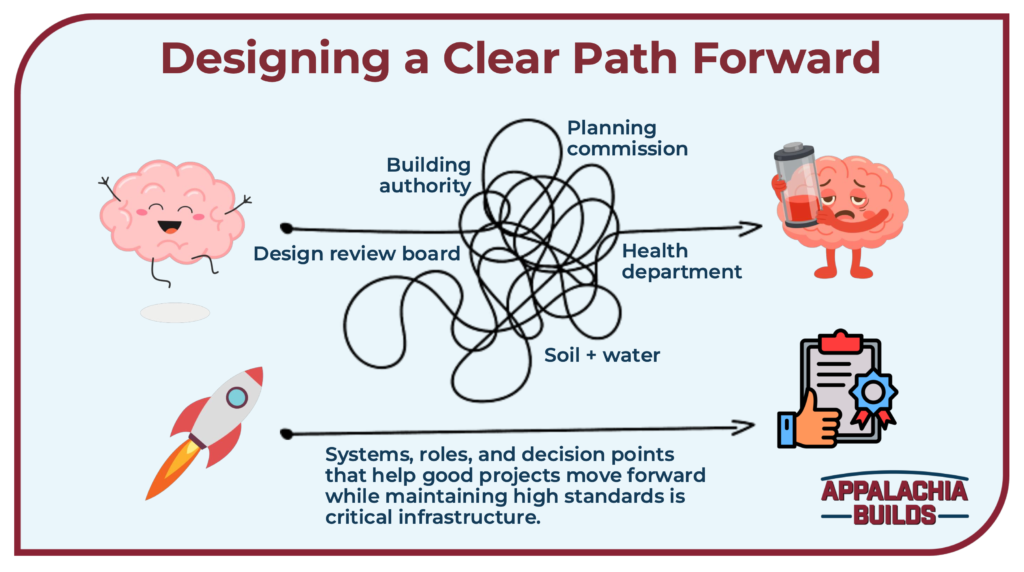
Imagine a project where:
- The developer has a vision
- The city supports it
- The community supports it
Everyone agrees it should happen. Now imagine what happens next.
- Accessibility requirements
- Parking negotiations
- Design review
- Floodplain approvals
- Building permits
- Health department reviews
- Planning commission approvals
- Soil and water requirements
Each step may be reasonable on its own. But together they create friction, delay, uncertainty, and cost. Nobody is intentionally stopping the project. The system simply lacks a clear sequence.
One Project Changed How I Think About Revitalization
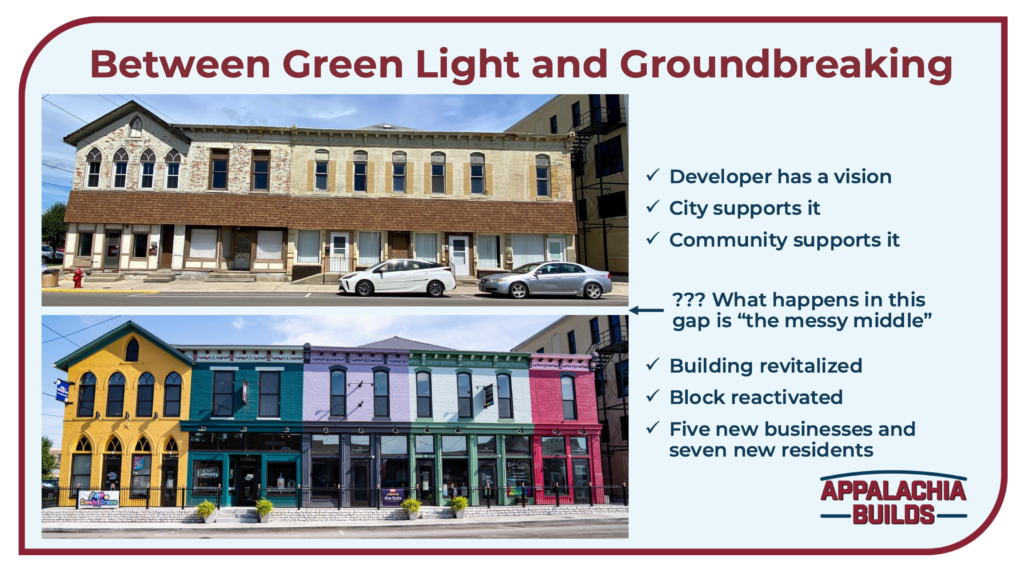
In my presentation, I shared the story of a rehabilitation project involving one of the oldest buildings in a small-town downtown.
The building was historically significant and the economics worked. The developer was committed. The apartments were pre-leased. Most of the storefronts already had tenants lined up.
Yet the project repeatedly stalled while navigating approvals, coordination between departments, accessibility requirements, signage approvals, parking negotiations, and variance requests. None of those issues alone would have killed the project. Together, however, they created months of delay and unnecessary uncertainty.
The experience left me asking a simple question:
Why is the pathway from idea to implementation so difficult to navigate?
Project Delivery Is Infrastructure
We often think of infrastructure as roads, bridges, broadband, or water lines. Those things matter. But I would argue that project delivery itself is infrastructure.
If local governments, nonprofits, developers, and entrepreneurs cannot clearly navigate the process from investment to action, then the value of every other economic development investment is diminished.
Communities do not necessarily need more programs. Sometimes they simply need clearer pathways.
Questions Every Community Should Be Asking
During the session, I asked attendees to reflect on questions like:
- Where do projects in your community consistently stall?
- When a project gets a “yes,” who is responsible for moving it forward?
- Which parts of your process protect quality—and which simply create friction?
- Could a first-time developer actually understand the path from idea to execution?
- Where could small, low-cost process improvements unlock outsized impact?
These are not just administrative questions. They are economic development questions.
My Biggest Takeaway
The most encouraging part of the conference was realizing that communities across Appalachia are wrestling with remarkably similar challenges.
Whether I was talking with people from Mississippi, West Virginia, Ohio, or elsewhere, the conversations kept returning to the same theme:
The ideas are already there.
The passion is already there.
The people are already there.
What many communities need is a better-designed pathway between green light and groundbreaking. At Revival, we believe architecture is only part of the solution. The real work is helping communities navigate the systems that allow good ideas to become great places.
Because small-town comebacks are not built by inspiration alone. They are built by designing the pathway.